

Analytics shows a few hundred visitors a month. The inbox shows nothing. Sales says leads come from referrals and LinkedIn, and the website “doesn't really work for us.”
This is one of the most common things we hear from B2B companies in Dubai, and it is almost always fixable. In our experience the cause is rarely one big thing. It's a handful of small leaks: traffic that was never going to buy, a homepage that doesn't say clearly what the company does, too little proof, and an inquiry path with too many steps or the wrong channel.
How this guide works
We work through the leaks in the order we'd check them on a real project: first make sure the problem is real, then look at who is visiting, what they see, whether they believe it, and how easy it is to get in touch. It ends with a 30-day plan you can follow yourself.
Step 1: Check the problem is real
Before changing anything, spend an hour ruling out the boring explanations. They're more common than you'd think.
- Test every form yourself. Submit each contact form on the site, on desktop and on your phone. Does the email arrive? Does it land in spam? Is it going to an inbox someone actually reads? Forms quietly break after hosting or email changes, and nobody notices for months.
- Check the phone number and WhatsApp link. Tap them on a phone. A wrong digit or a broken WhatsApp link loses exactly the people who were ready to talk.
- Look at where the traffic comes from. In Google Analytics, check traffic by country and source. A spike from countries you don't serve, or a large share of visits lasting a few seconds, usually means bots or irrelevant traffic, not buyers.
- Count inquiries that came through other channels. Some “website” leads arrive by phone, WhatsApp or a direct email after someone visited the site. If sales doesn't ask “how did you find us?”, the website gets no credit.
If the forms work and the traffic looks genuine, you have a real conversion problem. The next four sections cover where it usually is.
Reason 1: The traffic was never going to buy
Not all traffic is equal. A blog post ranking for “what is a free zone” can bring thousands of students and job seekers, and none of them will ever request a quote.
Signs this is your problem:
- Most visits land on blog or informational pages, not service pages
- Visitors come from countries you don't sell to
- Your top search terms are general questions, not things a buyer would type, like “[service] company in Dubai” or “[product] supplier UAE”
- Paid ads are on broad keywords and send clicks with very short visits
How to fix it:
- Rewrite service pages around buyer searches. Use the terms a buyer would actually search for, including the location: “corporate legal advisory Dubai”, “urea supplier UAE”, “luxury event management Dubai”.
- Link informational content to a service. Every blog post should point readers to the relevant service page with a clear next step.
- Tighten ad targeting. Restrict location, add negative keywords (“jobs”, “free”, “course”, “salary”), and send ad clicks to a page about that specific service rather than the homepage.
For many B2B companies, a few hundred visits from the right people beat ten thousand from the wrong ones.
Reason 2: Visitors can't tell what you do
Read your homepage headline out loud. If it could belong to any company in any industry, it isn't doing its job. “Empowering businesses through innovative solutions” tells a visitor nothing.
A B2B visitor decides in seconds whether they're in the right place. The top of your homepage should answer three questions without scrolling:
- What do you do? In plain words: “Corporate and commercial legal advisory”, not “Integrated excellence”.
- Who is it for? “For companies setting up and operating in the UAE.”
- What should I do next? One clear button: “Book a consultation”, “Request a quote”, “Talk to our team”.
The same applies to service pages. Each one should say what the service is, who it's for, what's included, how it works and what it costs (or what drives the cost), then end with a way to get in touch. Many B2B sites list services as one-line tiles and leave the visitor to guess the rest.
A quick test: show your homepage to someone outside your industry for five seconds, then ask what your company does. If they can't say it, neither can your buyers.
Reason 3: They don't believe you yet
B2B purchases are big, slow and often signed off by several people. Before anyone reaches out, they want evidence that you've done this before, for companies like theirs.
What counts as proof, from strongest to weakest:
- Results with numbers. “Bookings up 68% after the redesign” beats “we delivered an excellent website”.
- Named case studies. A short story: who the client was, what the problem was, what you did, what changed.
- Client logos and testimonials from real, named people with their role and company.
- The team. Names, faces and roles. In the UAE, buyers often want to know who they'll actually be dealing with.
- Credentials. Licences, accreditations, partnerships and memberships that a buyer can verify.
What hurts trust:
- Statistics that can't be checked (“500+ happy clients”, “100% satisfaction”)
- Testimonials with no name, or only a first name
- Stock photos of smiling people presented as your team
- A generic Gmail address or no physical address
If you're new and short on proof, show the work itself: before-and-after examples, a sample deliverable, or a detailed description of your process. Specific beats impressive.
Reason 4: Getting in touch is harder than it should be
Sometimes the visitor is convinced and still doesn't reach out, because the path is unclear, slow or in the wrong channel.
- Offer the channels UAE buyers actually use. Many prefer WhatsApp or a direct call to filling in a form. Put a WhatsApp button and a clickable phone number on every page, alongside the form, not instead of it.
- Make the form short and useful. Ask only what you need to reply well: name, company, email or phone, what they need, and maybe a dropdown for service or budget. Every extra required field loses some people.
- Use a dropdown to route, not to block. “Which service are you interested in?” helps you send the inquiry to the right person. A 15-field questionnaire before anyone has spoken to you stops the inquiry entirely.
- Say what happens next. “We reply within one business day” or “A consultant will call you to discuss your case” reassures people that someone is on the other side.
- Put a call to action on every page. Not just the contact page. The end of every service page, case study and blog post should offer one clear next step.
- Check the basics on a phone. Most first visits happen on mobile. If the page is slow, the button is hidden behind a cookie banner, or the form is hard to fill in on a small screen, you lose people at the last step.
- Consider Arabic. If part of your market prefers Arabic, a proper Arabic version of the key pages and the form can unlock inquiries that never came through before.
What this looks like in practice
Three projects from our own work, each fixing a different part of the problem.
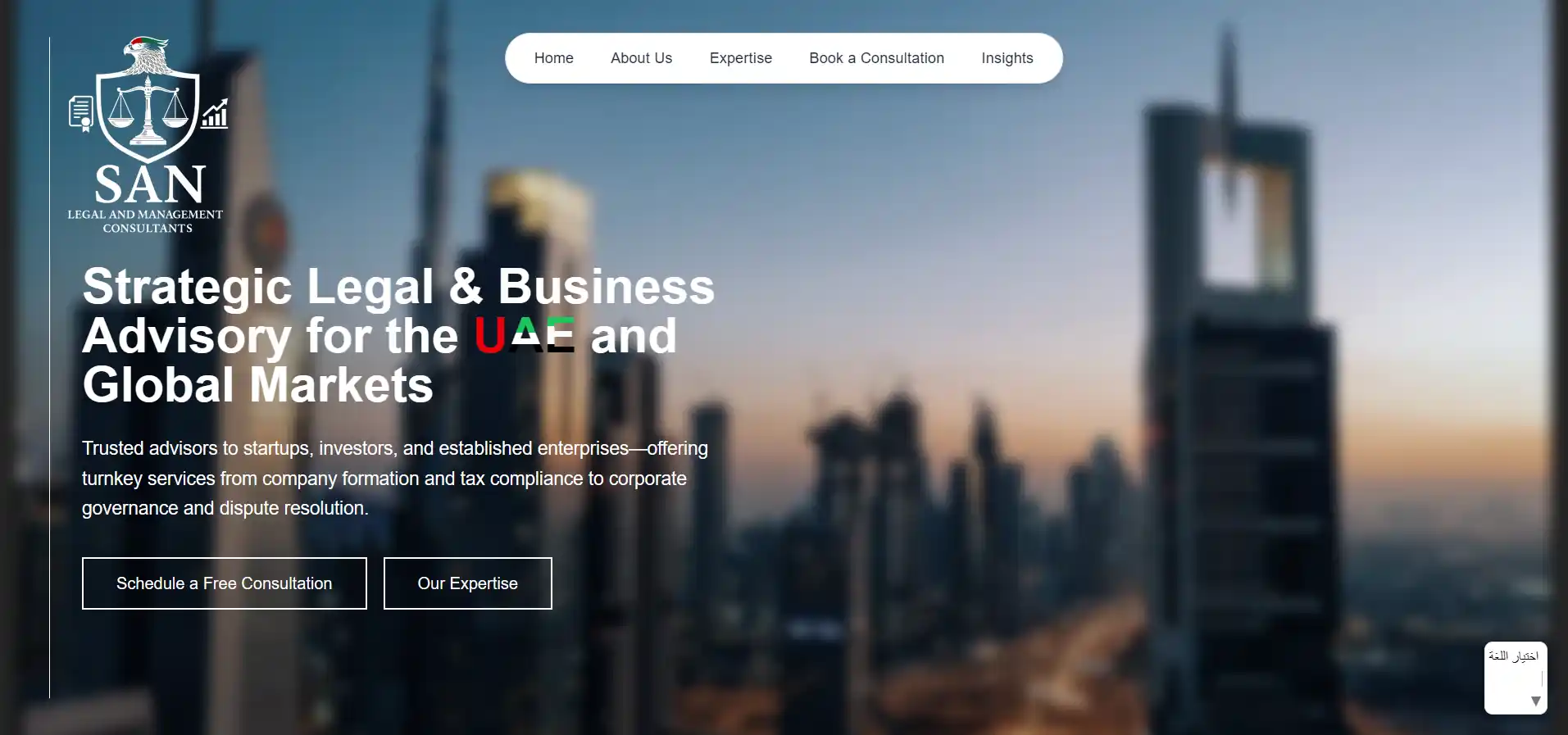
SAN Legal and Management Consultants: fixing the inquiry path
SAN is a UAE multidisciplinary firm covering legal, financial and corporate advisory. With that many practice areas, the challenge was getting each visitor to the right service and into a consultation without friction. We built a clear practice-area structure and a streamlined intake experience. Result: qualified consultation bookings up 68%.
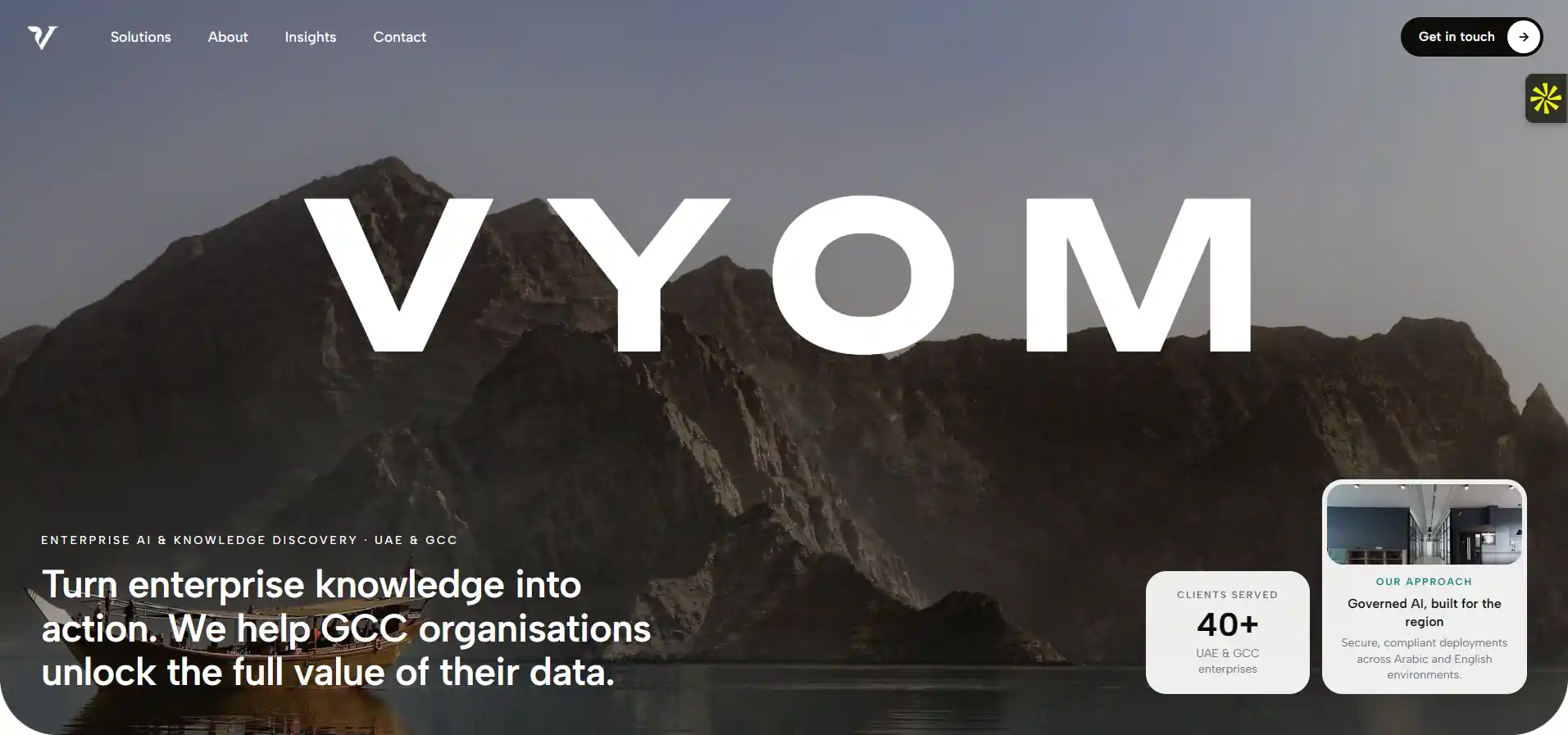
Vyom Technologies: fixing positioning
Vyom sells an enterprise AI and knowledge discovery platform, a product that's easy to describe vaguely. We built the brand identity, the UI/UX and the website to explain clearly what it does and position it for enterprise buyers across the GCC. Result: 3.4x more qualified enterprise inquiries within 60 days of launch.
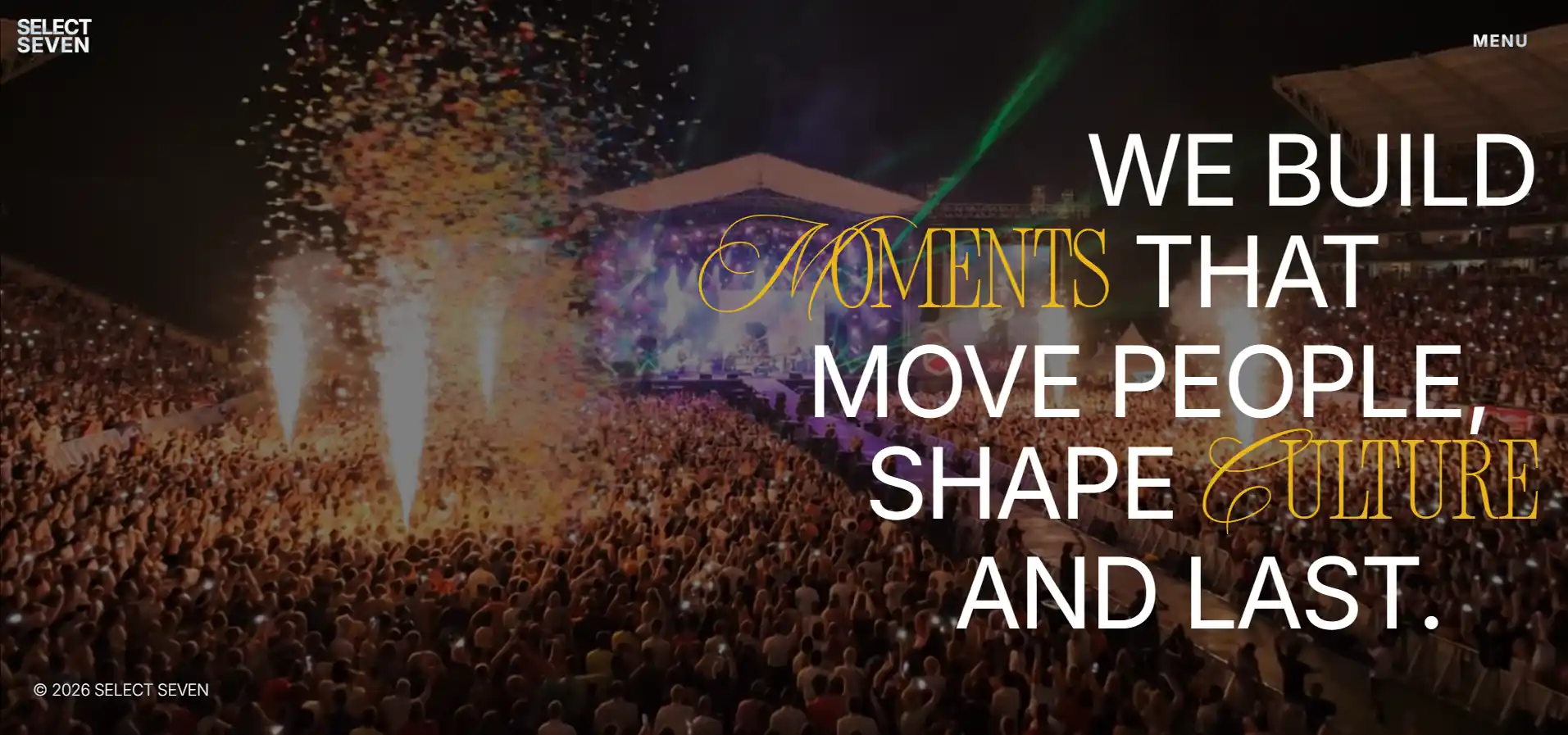
Select Seven: fixing proof
Select Seven runs luxury events across Dubai and India, and its buyers are paying for an experience they can't see in advance. We designed a video-first site so prospects can see the quality of the work before they get in touch. Result: 4.2x more direct high-ticket international event inquiries.
The pattern is the same each time: the companies already had traffic and good work. The website just wasn't making it easy to understand, believe and act.
A 30-day plan to fix it
Week 1: Diagnose
Test every form, phone link and WhatsApp button. Check traffic by source, country and landing page. Ask sales where recent leads actually came from. Set up conversion tracking for form submissions, WhatsApp clicks and phone taps so you can measure what changes.
Week 2: Fix the message
Rewrite the homepage headline and the top of each main service page so they say what you do, for whom, and what to do next. Add one clear call to action to every page.
Week 3: Add proof
Write up two or three case studies with real results. Add named testimonials, team photos and any credentials buyers can check. Remove claims you can't back up.
Week 4: Remove friction
Shorten the form, add WhatsApp and a clickable phone number on every page, state your response time, and test the whole path on a phone.
Then leave it for a month or two and compare inquiries before and after. Small B2B sites don't get enough traffic for fast A/B tests, so judge by the trend in real inquiries.
Quick checklist
- Every form, phone link and WhatsApp button tested and working
- Conversion tracking set up for forms, WhatsApp and calls
- Homepage says what you do, for whom, and the next step, above the fold
- Service pages written around what buyers search for
- At least two case studies with real results
- Named testimonials and real team photos
- A call to action at the end of every page
- Short form, plus WhatsApp and phone on every page
- Response time stated on the contact page
- Whole inquiry path tested on a phone
FAQ
What's a normal conversion rate for a B2B website?
It varies too much by industry and traffic source for a single benchmark to be useful. Compare against your own numbers: if inquiries rise after these changes while traffic stays flat, the fixes are working.
Should I redesign the whole website?
Usually not first. Most of the fixes above are copy, proof and contact changes you can make on the existing site. Redesign when the site is slow, hard to update or looks out of date to your buyers.
Do I need more traffic or better conversion?
Fix conversion first. Sending more visitors to a page that doesn't convert just costs more.
My leads come from referrals. Does the website even matter?
Yes. Referred buyers almost always check your website before getting in touch. A weak site can lose leads your network already won.
Not sure where your site is leaking?
TakesTwice builds and improves B2B websites for companies in the UAE, including SAN Legal and Management Consultants, Vyom Technologies and Select Seven. If your website gets visits but not inquiries, talk to us and we'll tell you where we'd start.